
I’m someone who is always looking for simple homemade recipes that help me reach my protein and fiber goals, so this chia pudding recipe has earned a permanent spot in my refrigerator. As a busy Mom, I appreciate having a nourishing breakfast or snack ready for me, my kids, or my husband to grab on busy mornings.
What I probably love most about this recipe is how incredibly simple it is. A handful of wholesome ingredients come together in 5 minutes, and my version develops a rich, spoonable texture thanks to the balance of chia seeds, yogurt, and milk. It’s one of those recipes that feels equally appropriate for breakfast, a post-workout snack, or a healthier dessert.
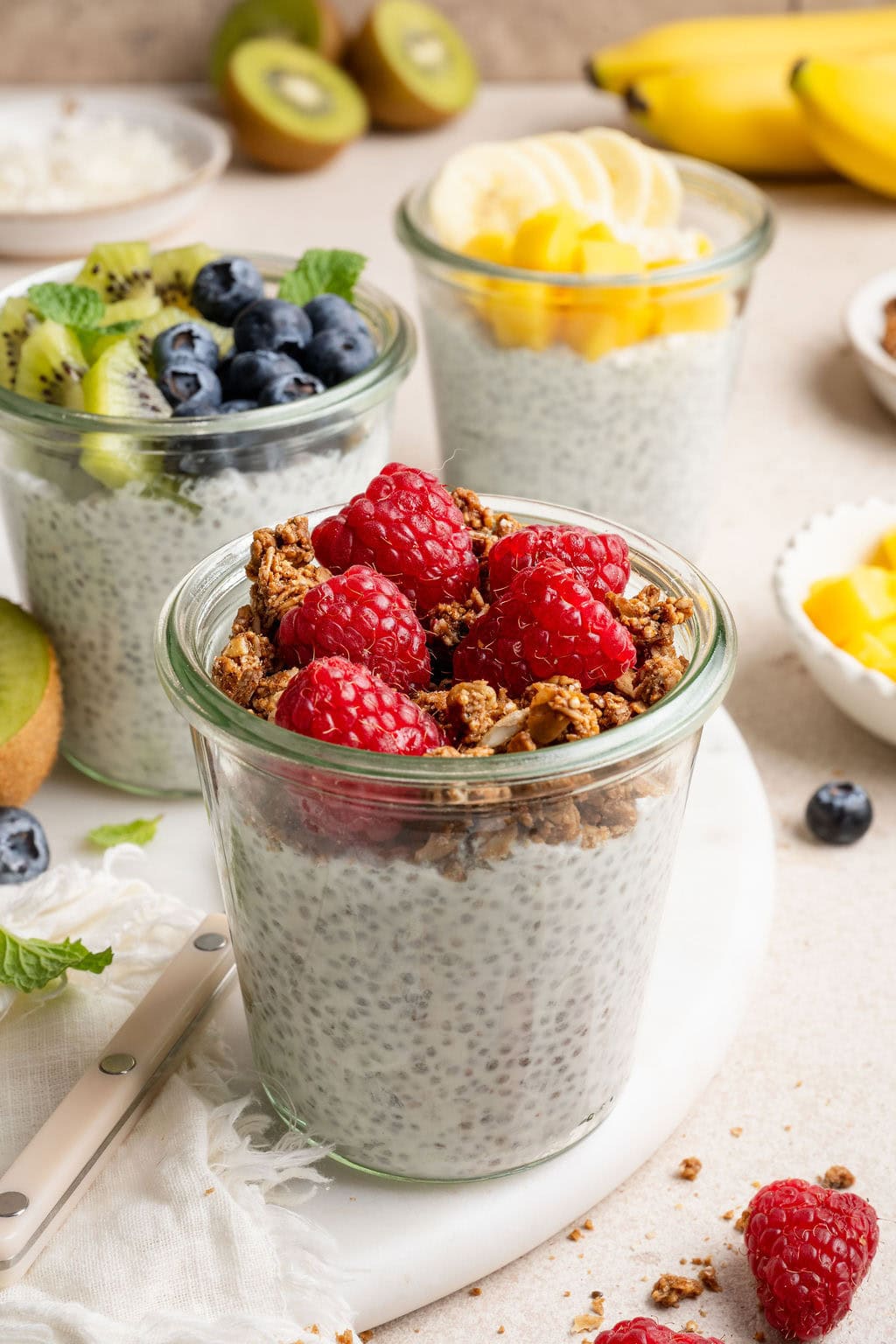
Recipe Highlights
Packed with protein and fiber. Between the Greek yogurt, chia seeds, and milk (I prefer soy milk most often), this pudding delivers a satisfying 20 grams of protein and 10 grams fiber that helps keep my hunger at bay for hours.
Made with simple ingredients. Everything in this recipe is easy to find at a regular grocery store, and most of the ingredients are staples I tend to always keep on hand. This recipe is also naturally gluten free, grain free, nut free, and Paleo friendly.
Easy to customize. The base flavor is lightly sweetened with maple syrup and vanilla, which is a nice canvas for customizing this chia pudding however I want to. Different milks, toppings, fruits, and flavor additions give me a different flavor almost every time I make it.
Perfect for meal prep. A batch lasts for several days in the refrigerator, making it easy to meal prep this recipe for breakfasts or snacks ahead of time for a busy week.
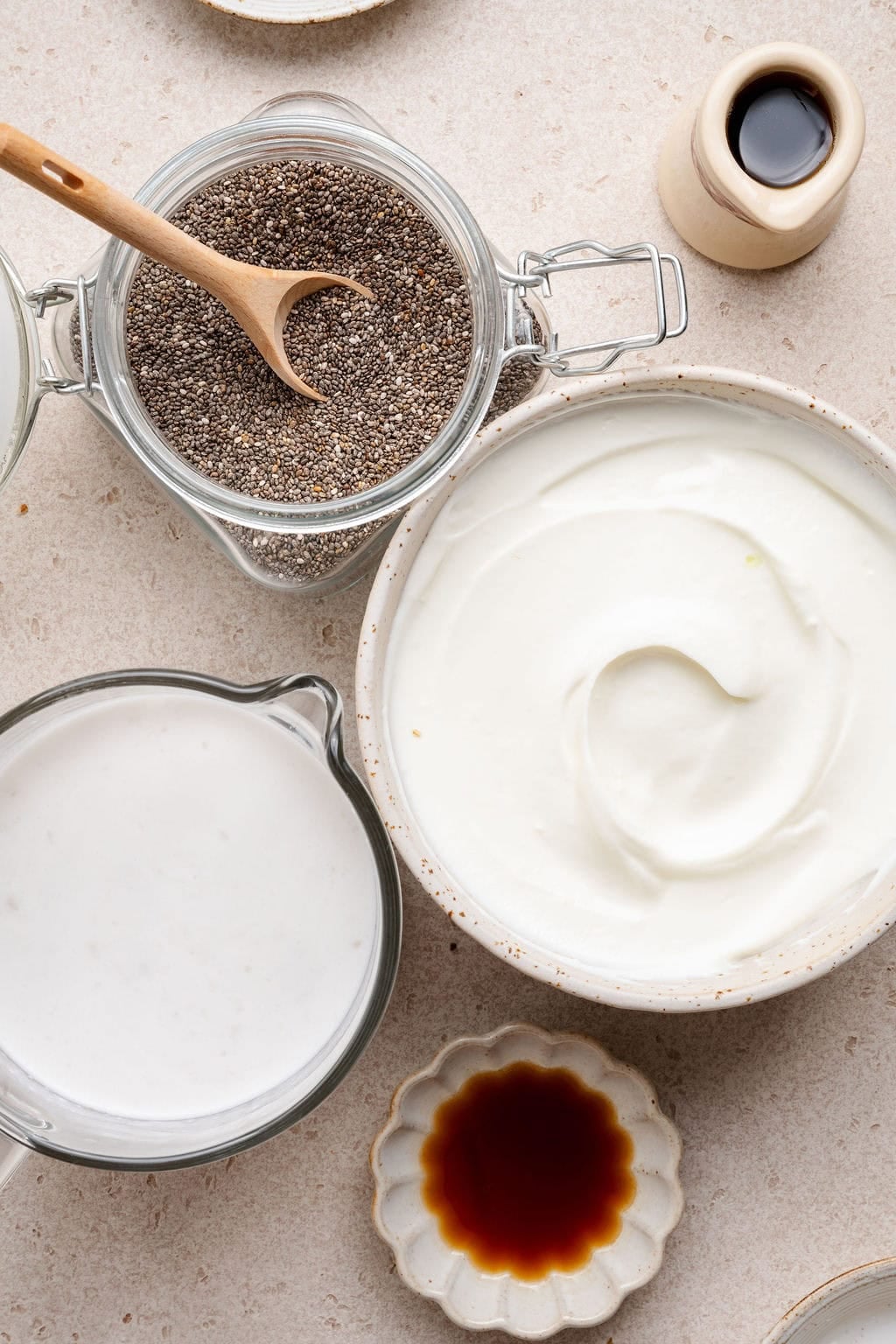
Ingredient Notes And Substitutions
- Milk: Milk is the liquid that allows the chia seeds to absorb moisture, swell, and thicken the liquid into a pudding consistency without the need for any additional thickeners. I typically use soy milk or almond milk because this recipe thickens especially well with non-dairy milk. For an extra-rich pudding, full-fat canned coconut milk creates a wonderfully creamy texture. Dairy milk can be used, but the final pudding may be somewhat thinner due to the lactose content.
- Chia seeds: These tiny seeds are the star of the recipe. As they absorb liquid, they expand and create the signature pudding-like consistency. Fresh black chia seeds generally provide the best thickening results, so it’s worth checking that they haven’t been sitting in the pantry for years.
- Plain Greek yogurt: Greek yogurt adds creaminess and helps boost the protein content. I prefer full-fat plain Greek yogurt for the richest texture, but low-fat varieties also work.
- Maple syrup: A small amount of maple syrup adds just enough sweetness without overpowering the other flavors. I’ve also tried sweetening chia seed pudding with other sweeteners, especially honey and agave nectar, and it works great.
- Vanilla: Vanilla extract enhances the overall flavor and gives the pudding a subtle warmth that makes it taste more dessert-like without adding any sugar.
Find the ingredient list with exact measurements in the recipe card below.
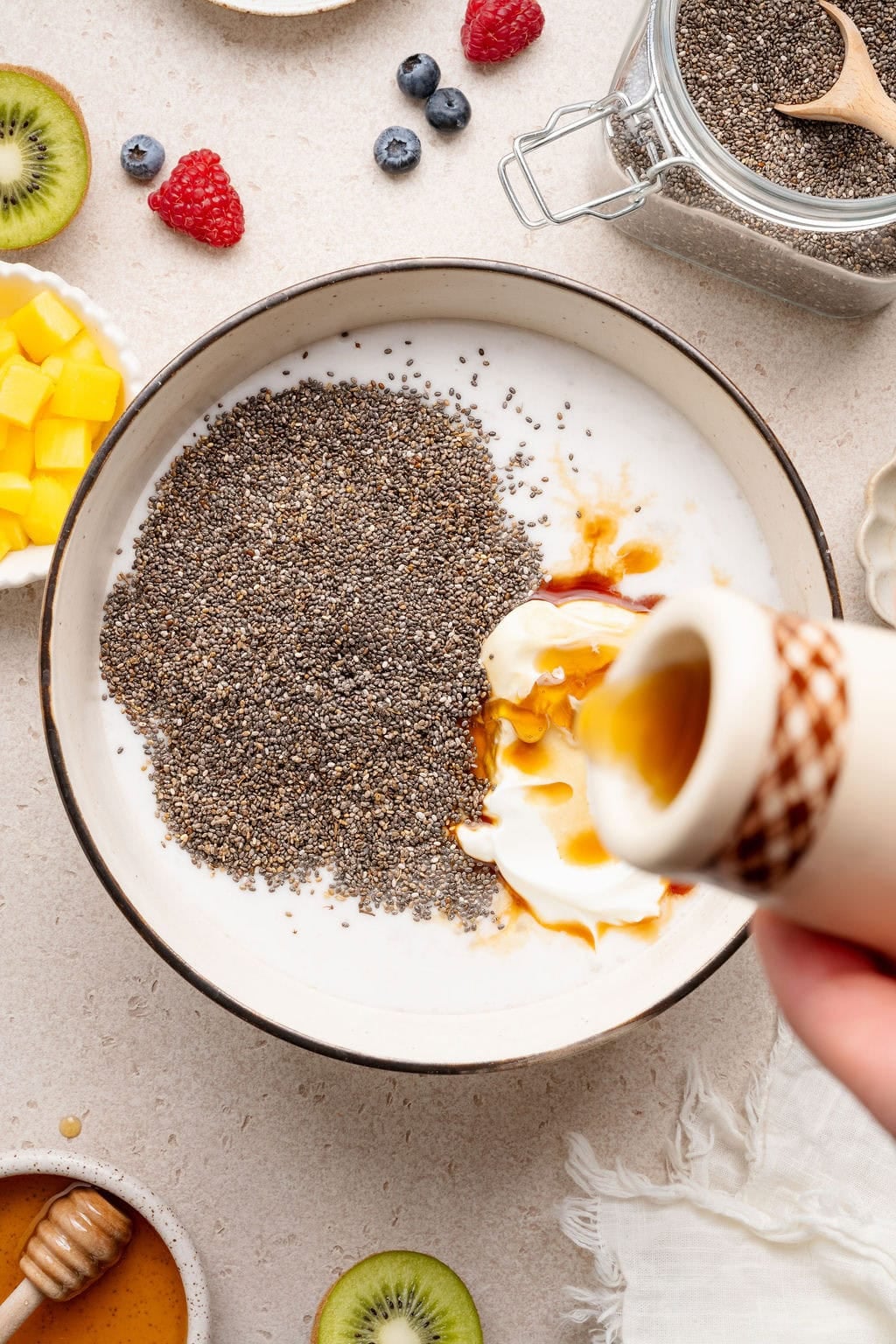
Ingredient Spotlight: Chia Seeds
Chia seeds may be tiny, but they’re remarkably nutrient-dense. One of their biggest nutritional benefits is their fiber content, which helps support my digestive health and promote fullness after meals. That’s one of the reasons I love incorporating them into recipes like this one and my new favorite homemade condiment: chia seed jam.
Chia seeds also provide plant-based omega-3 fatty acids, antioxidants, and small amounts of important minerals such as calcium, magnesium, and phosphorus. When soaked in liquid, they form a gel-like coating that creates the thick texture chia pudding is known for.
Because they’re rich in both fiber and healthy fats, chia seeds can help create meals that feel satisfying and balanced. For anyone looking for an easy way to increase fiber intake, they’re one of my favorite ingredients to keep stocked in my pantry.
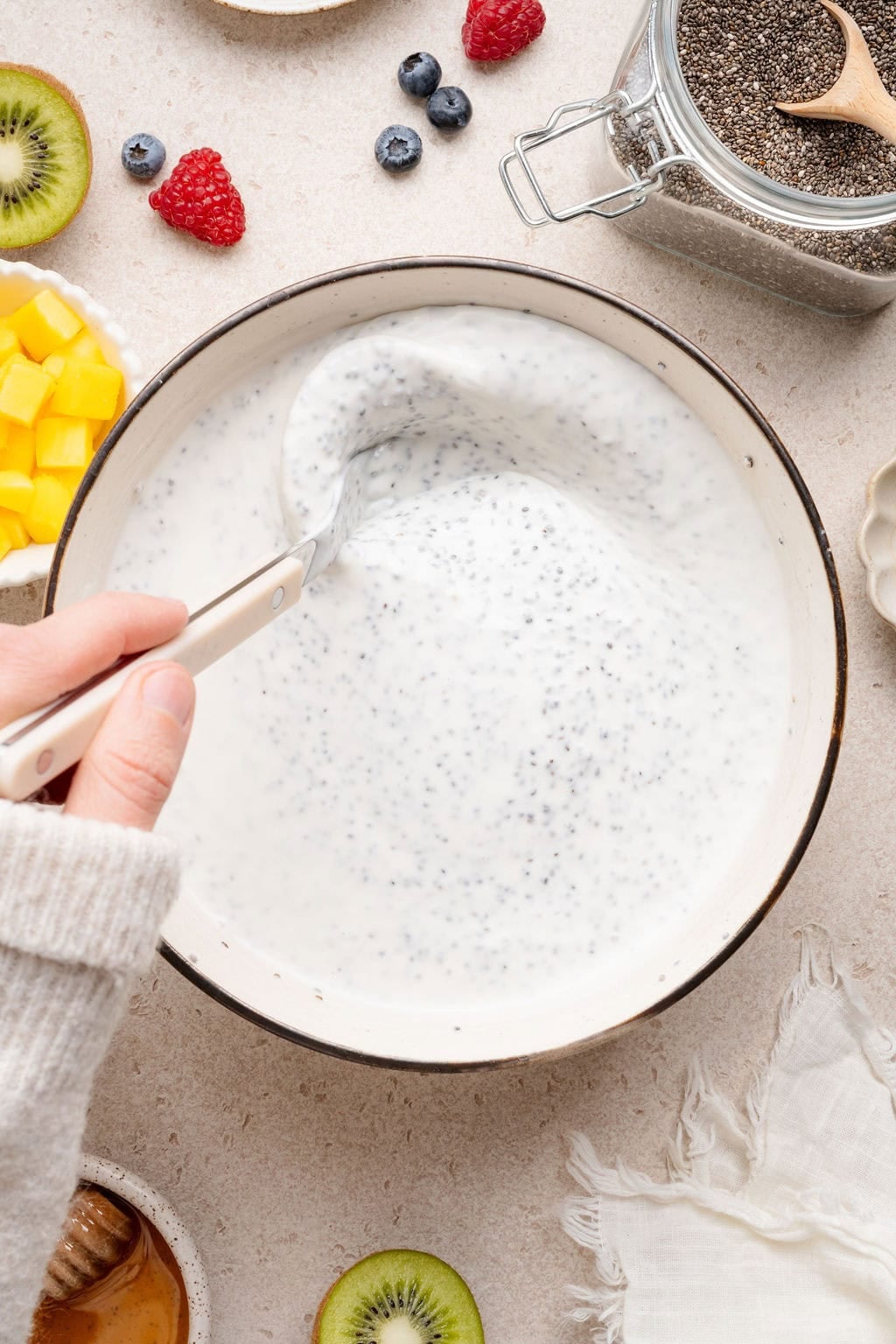
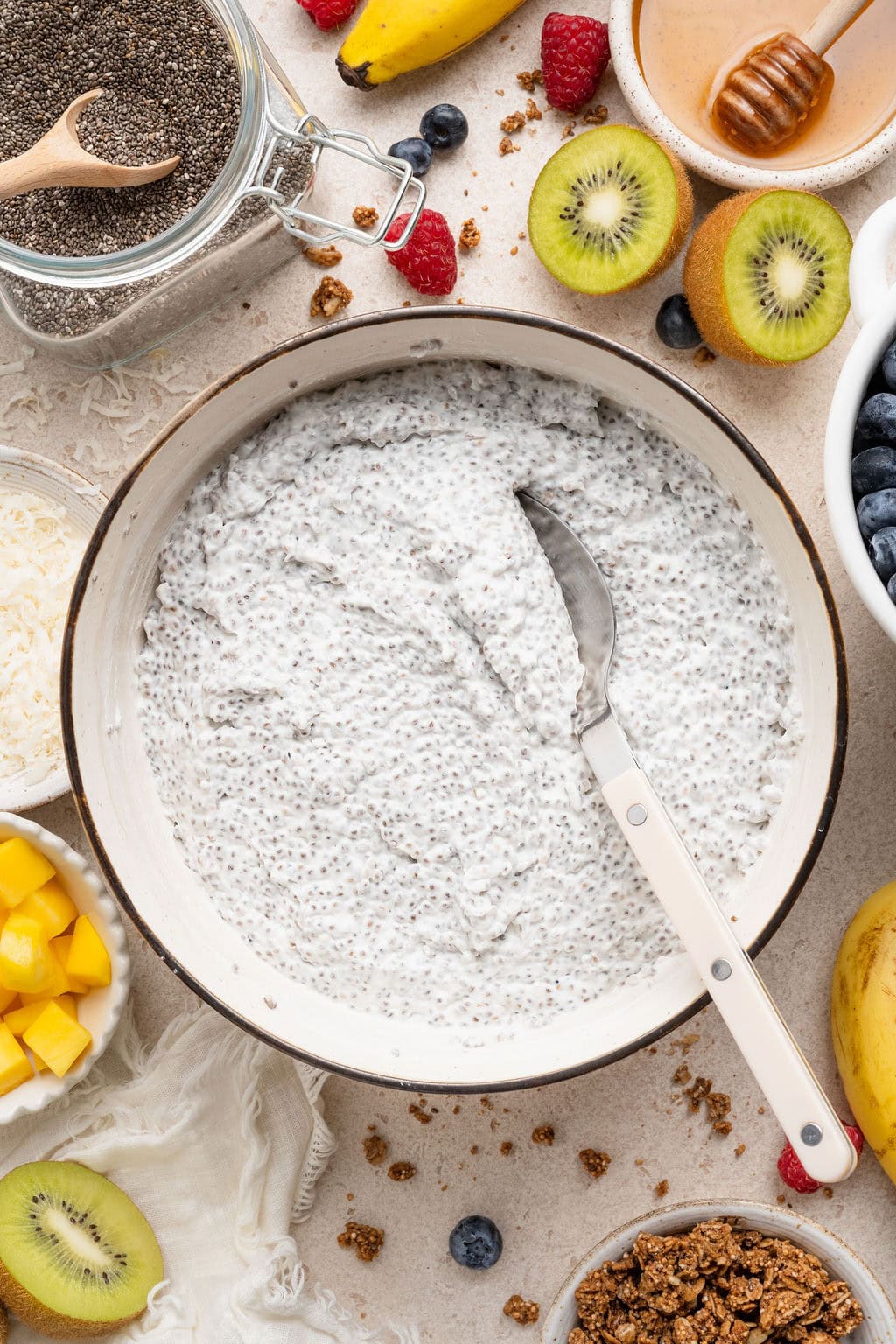
Combine, Chill, Enjoy
Making chia pudding couldn’t be much easier, and in addition to these protein oats, it’s one of my favorite make-ahead breakfast recipes to get ready for a busy week.
- Combine the ingredients: I start by stirring together the milk, Greek yogurt, maple syrup, chia seeds, and vanilla until everything is thoroughly combined. After letting the mixture sit for about a minute, I stir it again to help distribute the chia seeds evenly.
- Chill 2 hours: The first chill is important because it gives the chia seeds time to begin absorbing liquid. After a few hours in the refrigerator, I always stir the mixture again before portioning it into jars or containers.
- Stir again: This second stir is one of the most important steps in the recipe. Chia seeds naturally settle and clump together as they hydrate. Breaking up those clumps helps ensure every seed can absorb liquid properly. If the seeds remain clumped at the bottom of the bowl or container, the pudding often ends up thinner than expected.
- Chill again: After portioning, I let the pudding chill overnight, or at least 8 hours, until it develops a thick, creamy consistency. By morning, it’s ready for toppings.
For serving size and the complete directions and ingredient amounts, scroll down to the recipe card below. All of our recipes include the nutrition analysis, listing calories (kcals), protein, carbohydrates/carb, fiber, sugar, sodium, cholesterol, and more per serving.
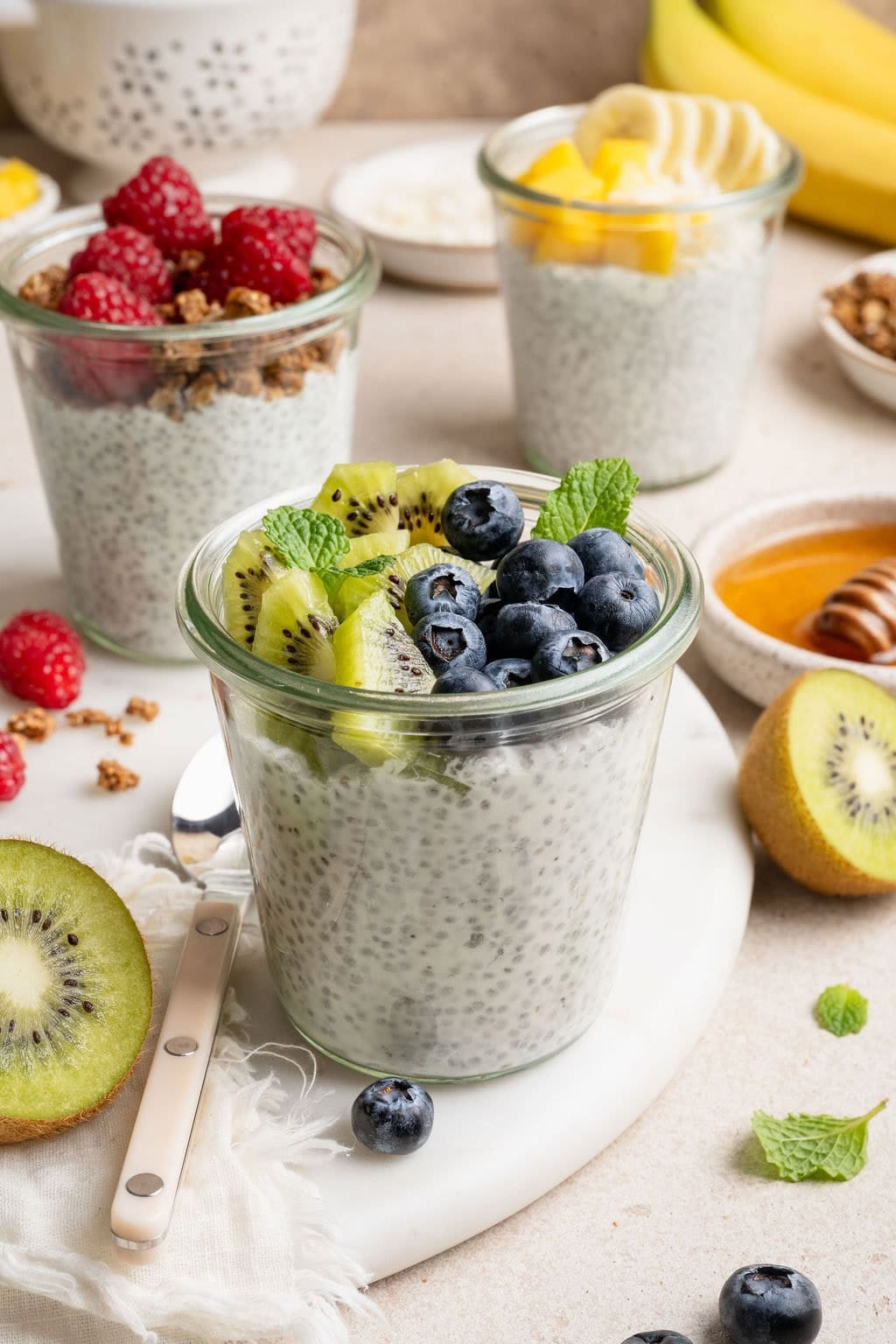
Make It Dairy Free
To make dairy-free chia seed pudding, I swap the Greek yogurt for a non-dairy Greek-style yogurt (such as Icelandic Provisions or Siggi’s non-dairy yogurts) and use a non-dairy milk such as soy milk, almond milk, or coconut milk.
Interestingly, this recipe actually works best with non-dairy milk anyway. The lactose in dairy milk can prevent the pudding from thickening as much as it does with non-dairy alternatives. Soy milk is often my first choice because it contributes extra protein while still allowing the pudding to set beautifully.
For an especially rich dairy-free version, full-fat canned coconut milk creates a luxuriously creamy texture.
Try Other Mix-Ins
Once I mastered the base recipe for this chia pudding, I started experimenting. Some of my favorite mix-ins are ground cinnamon, which adds some warmth and tastes great with a topping of fresh blackberries or peaches. I’ve also made chocolate chia pudding by stirring in a little cocoa powder, resulting in an indulgent creamy pudding that I top with a little nut butter and mini chocolate chips for a sweet snack that still has fiber and protein.
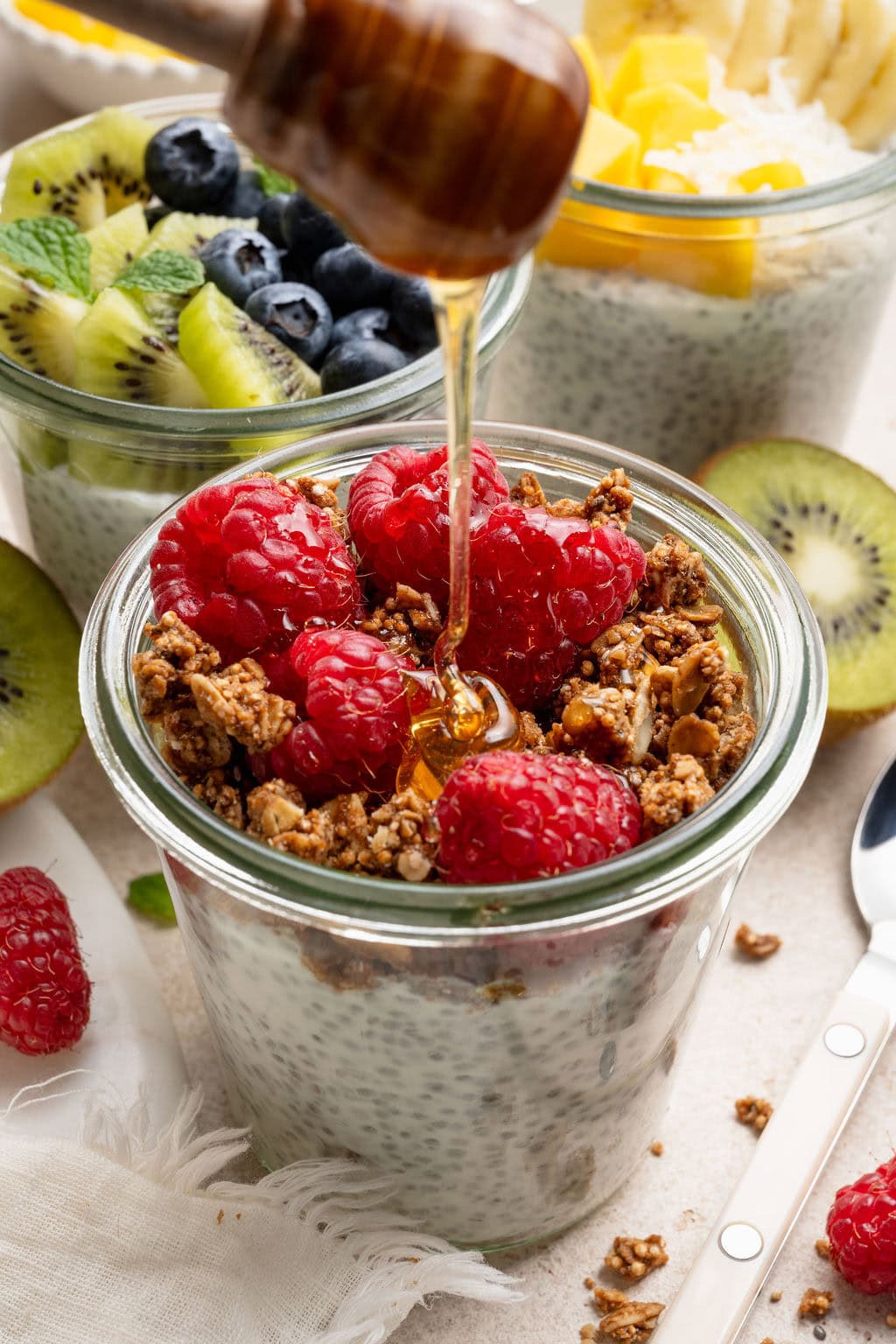
Top With Fruit, Granola, And More
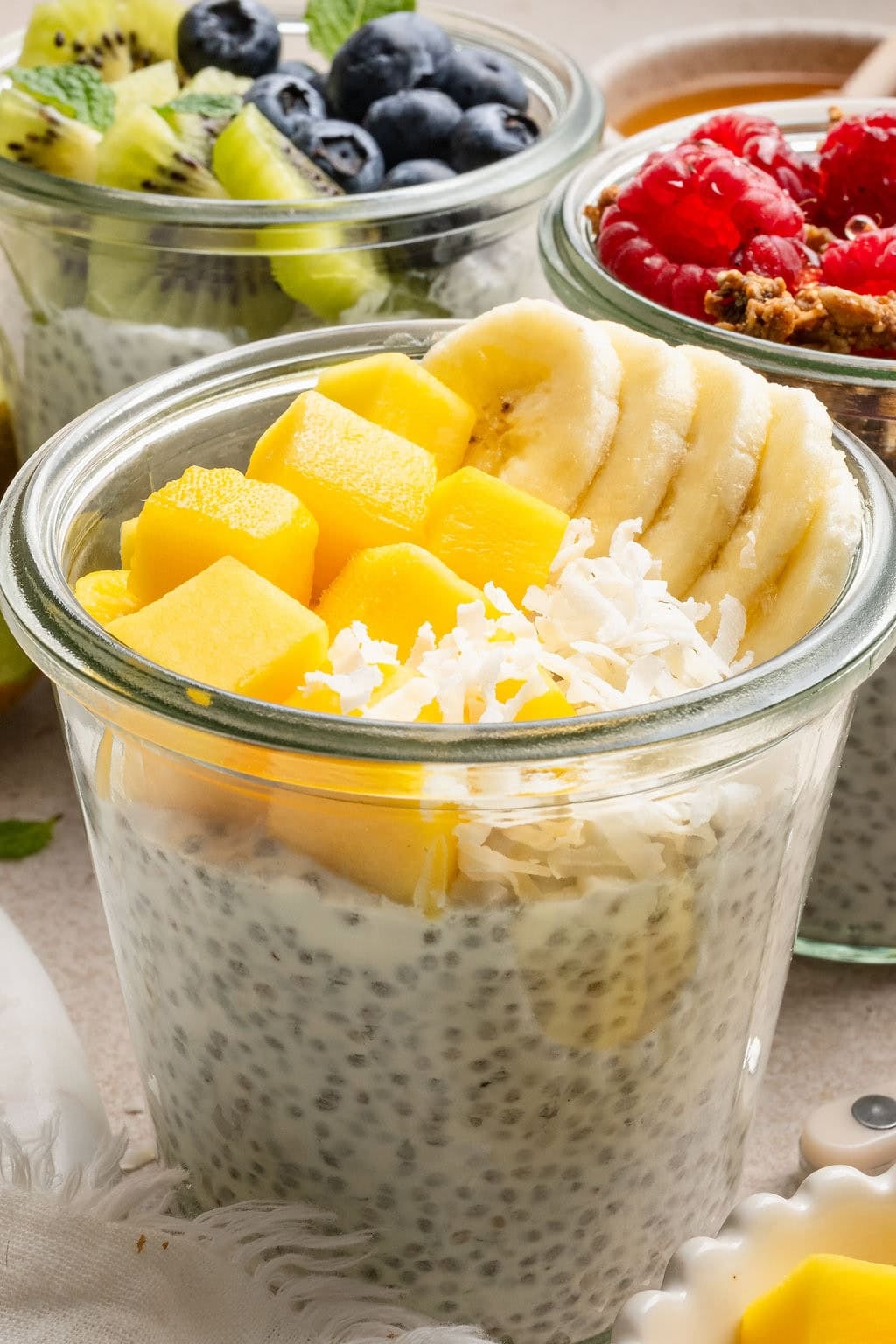
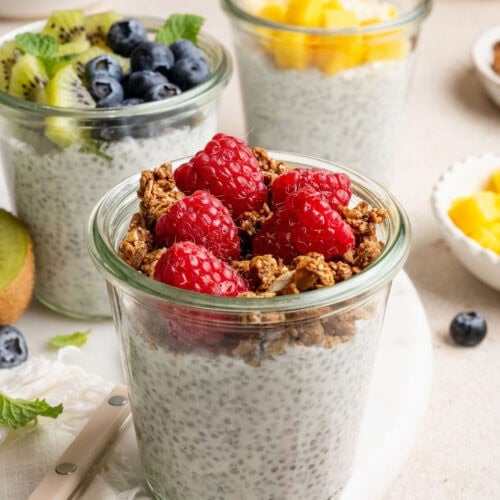
When the chia pudding is set (meaning, it’s nice and thick, ready to eat with a spoon) I dress it up with different toppings. Fresh berries are always a reliable choice, especially blueberries, raspberries, and strawberries. Sliced bananas add natural sweetness, while chopped kiwi provides a bright, tangy contrast. I change it up with the seasons, adding almost any fresh fruit I have on hand. For extra crunch, I sprinkle granola, chopped nuts, or coconut flakes over the top just before serving.
When I want a more substantial healthy breakfast, I serve chia pudding alongside eggs, a smoothie, or a slice of whole-grain toast. It also works well as an afternoon snack or a lighter dessert after dinner.
Storage Directions
Store the chia pudding in airtight containers or small mason jars in the refrigerator for up to 5 days.
I prefer portioning the pudding into individual containers (these jars are perfect) before storing because it makes breakfast and snacks especially convenient throughout the week. I’ve learned that it’s best to add toppings just before serving so they stay fresh and crunchy.
Frequently Asked Questions
The most common culprit is insufficient chilling time, clumped chia seeds, or low-fat dairy milk. Giving the pudding a second stir after the initial chill helps break apart clusters and allows the seeds to absorb liquid more evenly. Older chia seeds may also lose some of their thickening ability over time. Also, the lactose in dairy milk sometimes prevents that pudding from thickening, so this recipe tends to work best with non-dairy milk, such as unsweetened almond milk, soy milk, oat milk, or full-fat or light coconut milk.
Greek yogurt already provides a substantial protein boost, but I sometimes increase the protein even further by using soy milk (which is higher in protein than other milk alternatives) or stirring in a scoop of vanilla protein powder or collagen. Choosing a higher-protein Greek yogurt can also help.
Yes, for most people, chia seeds can be part of a healthy daily eating pattern. They’re rich in fiber and other nutrients, making them a convenient addition to breakfasts and snacks.
Research suggests that the fiber and healthy fats found in chia seeds may support healthy blood sugar management and cholesterol levels as part of an overall balanced diet.


Want to save this recipe?
Enter your email below & we’ll send it straight to your inbox. Plus you’ll get great new recipes from us every week!
Chia Seed Pudding Recipe
This creamy chia seed pudding combines a few everyday ingredients for a protein-packed breakfast or snack. Easy to prepare ahead of time, it’s endlessly customizable with fruit, granola, and other favorite toppings.
Ingredients
- 1 ½ cups milk of choice*
- 2 cups plain Greek yogurt
- 1 tablespoon pure maple syrup
- ½ cup chia seeds
- 1 teaspoon pure vanilla extract
- Optional toppings: berries, chopped kiwi, sliced bananas, chopped nuts, shredded coconut, and/or granola
Instructions
- In a medium sized bowl, combine the milk, yogurt, maple syrup, chia seeds, and vanilla, stirring until well mixed.
- Set aside for 1 minute to allow the chia seeds to distribute, then stir the mixture again.
- Chill the mixture in the refrigerator for 2-3 hours, then give it another good stir to loosen any clumps of chia seeds.**
- Divide the pudding into 4 to 6 individual containers or small mason jars. Cover the containers with lids and place them in the refrigerator to chill at least 8 hours or overnight for the pudding to set.
- Before serving, top with desired toppings, such as chopped fruit, coconut shreds, and/or granola.
- Refrigerate pudding for up to 5 days.
Last Step! Please leave a review and rating letting us know how you liked this recipe! This helps our business thrive so we can continue providing free recipes and high-quality content for you.
Notes
* This recipe works best with non-dairy milk, as the lactose in dairy milk prevents the pudding from getting very thick. I prefer to use soy milk or almond milk. For a richer pudding, I use full-fat canned coconut milk. Dairy milk will work, especially full-fat dairy milk, though the pudding will likely have a thinner consistency.
** It’s important to stir the chia pudding after it has initially chilled for a few hours. This helps break up any clumps of chia seeds in the milk or at the bottom of the jar. If the chia seeds are clumped, they won’t absorb as much liquid, which will result in a thinner pudding.
The nutrition information below reflects the recipe made with soy milk and full-fat plain Greek yogurt and divided into 4 servings. If the recipe were divided into 6 servings (approximately ⅔-cup each) the nutrition analysis is as follows: Per ⅔-cup serving: 199 calories, 9 g total fat (2 g sat fat), 59 mg sodium, 15 g carb (7 g fiber, 7 g sugar), 13 g protein, 8 mg cholesterol
Nutrition Information
- Serving Size: 1/4 of recipe or 1 cup
- Calories: 298
- Fat: 13 g
- (Sat Fat: 3 g)
- Sodium: 88 mg
- Carbohydrate: 24 g
- (Fiber: 10 g
- Sugar: 11 g)
- Protein: 20 g
- Cholesterol: 11 mg
Dietary
Recipe Changelog
- June 2026: We previously published a few versions of chia pudding that contained different flavorings and mix-ins. Download our previous raspberry chia pudding parfaits here. And download our previous mixed berry protein chia pudding here.
The photos in this post were taken by Kaitlin of Creating Kaitlin.
For ultimate success, we highly recommend reading the tips in the full blog post above. All photos and content are copyright protected. Please do not use our photos without prior written permission. If you wish to republish a recipe, please rewrite the recipe in your own unique words. Link back to the source recipe here on The Real Food Dietitians. Thank you!

How many TBSP are in one scoop of the collagen you use? I have all the ingredients to make this yummy pudding, but a different brand of collagen. Can’t wait to make this for some quick breakfasts!
Hi Kelly,
1 scoop is about 2 1/2 tablespoons (or 11 grams)
Thank you so much!!
I want to make as-is but can you clarify the serving size? Is it 1 cup?
Hi Kim! It’s probably closer to 2/3-3/4 cup. I just divide it into 4 or 5 individual servings after it sets.
This looks delish! Could I make it without the collagen? I’m not too concerned about the protein content. Would it change the consistency do you think?
Yes, you can absolutely omit the collagen. It will still turn out great!
What amount is I/2 can of water or milk? Do you mean use the coconut can?
Yes, 1/2 of the coconut milk can filled with water or milk.
I’ve made this for breakfast meal prep every week since I’ve found the recipe. Delicious and creamy!