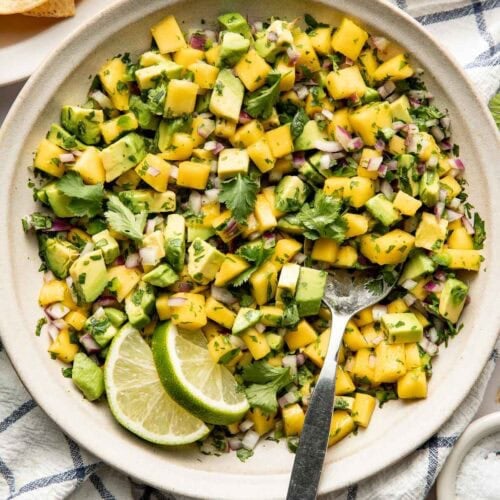
I first learned how to cut a mango the right way when I was an editor and worked in the Better Homes & Gardens Test Kitchen in Des Moines, Iowa. A representative from the national mango board was there to show me and the other editors how to cut a mango the easiest way possible, and I’ve been using this technique ever since. Below I share the step-by-step process including how-to photos so knowing the best way to cut mango will be easy from now on.
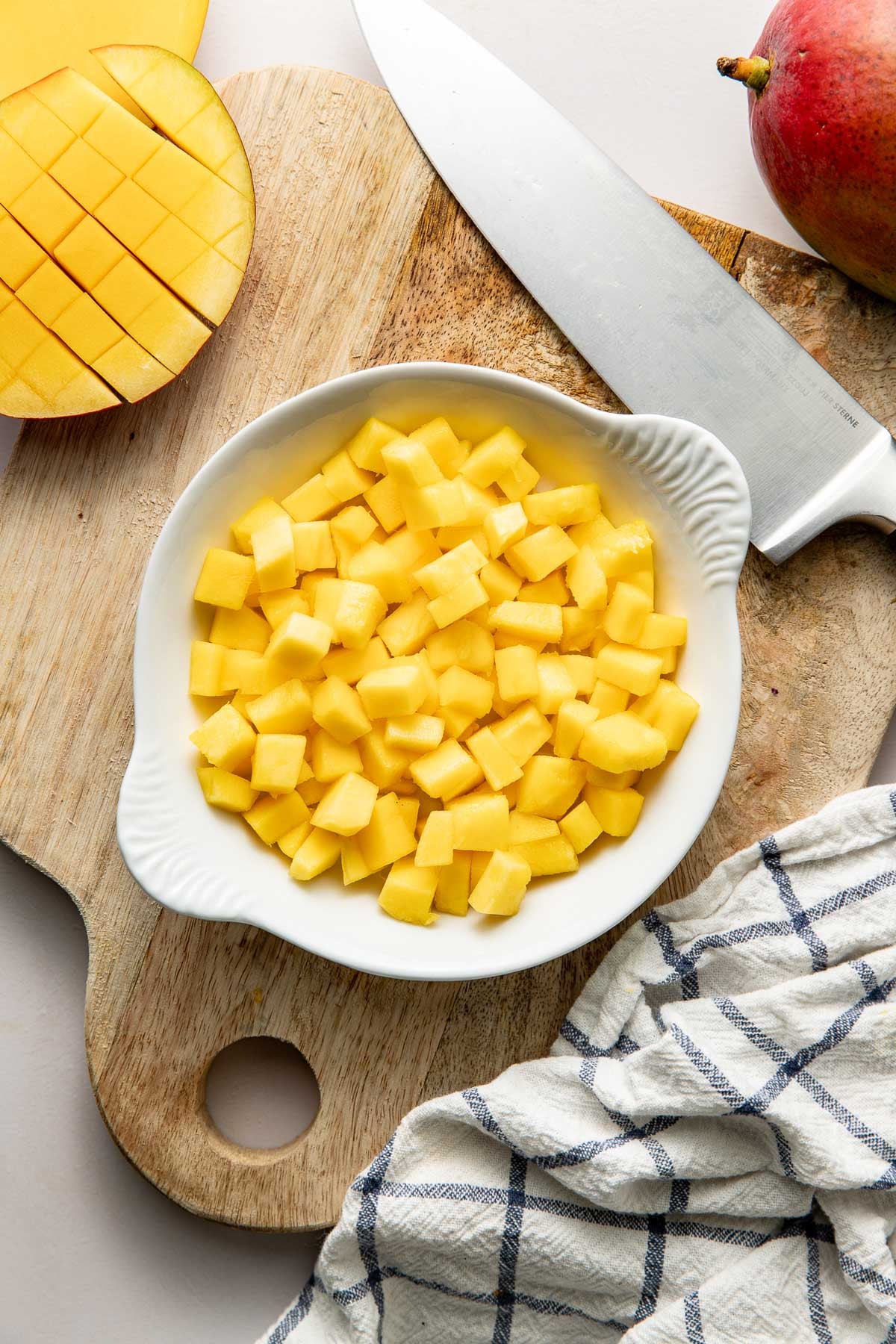
Nutrition Spotlights
Like other types of fruit, mango is a rich source of vitamins, minerals, and antioxidants. It’s especially high in vitamin C, fiber, copper, folate, and vitamin B6. It’s also a good source of polyphenol antioxidants that can help protect body cells against free radicals.
1 cup of fresh diced mango contains:
- Almost 3 grams of fiber
- 67% of the Daily Value (DV) for vitamin C
- 20% of the DV for copper
- 18% of the DV for folate
- 15% of the DV for vitamin B6
- 10% of the DV for vitamin A
- 10% of the DV vitamin E
Selecting A Mango
There are more than 40 types of mango, which is much more than I realized. But, throughout the year, the following six types are most likely the ones available at most grocery stores:
- Tommy Atkins: this is the most popular and common type of mango available in the U.S. It’s small and reddish-orange in color and has a citrus scent and fibrous flesh
- Haden: these small mangoes have shades of green, yellow, orange, and red and have smooth sweet-and-sour tropical-tasting flesh
- Honey: also known as Ataulfo mangoes, honey mangoes are vibrant yellow, have a sweet tropical and peach-like sweet-and-sour flavor and scent
- Kent: these dark green mangoes are sweet and juicy and have deep golden yellow flesh and ultra sweet flavor
- Keitt: with a lighter greenish-yellow peel, these mangoes are the most firm, smooth, and have sweet light yellow flesh
- Alphonso: often called the “king of mangoes” this small almond-shaped mango has a reddish almost saffron-colored flesh that is smooth, buttery texture
How To Tell If A Mango Is Ripe
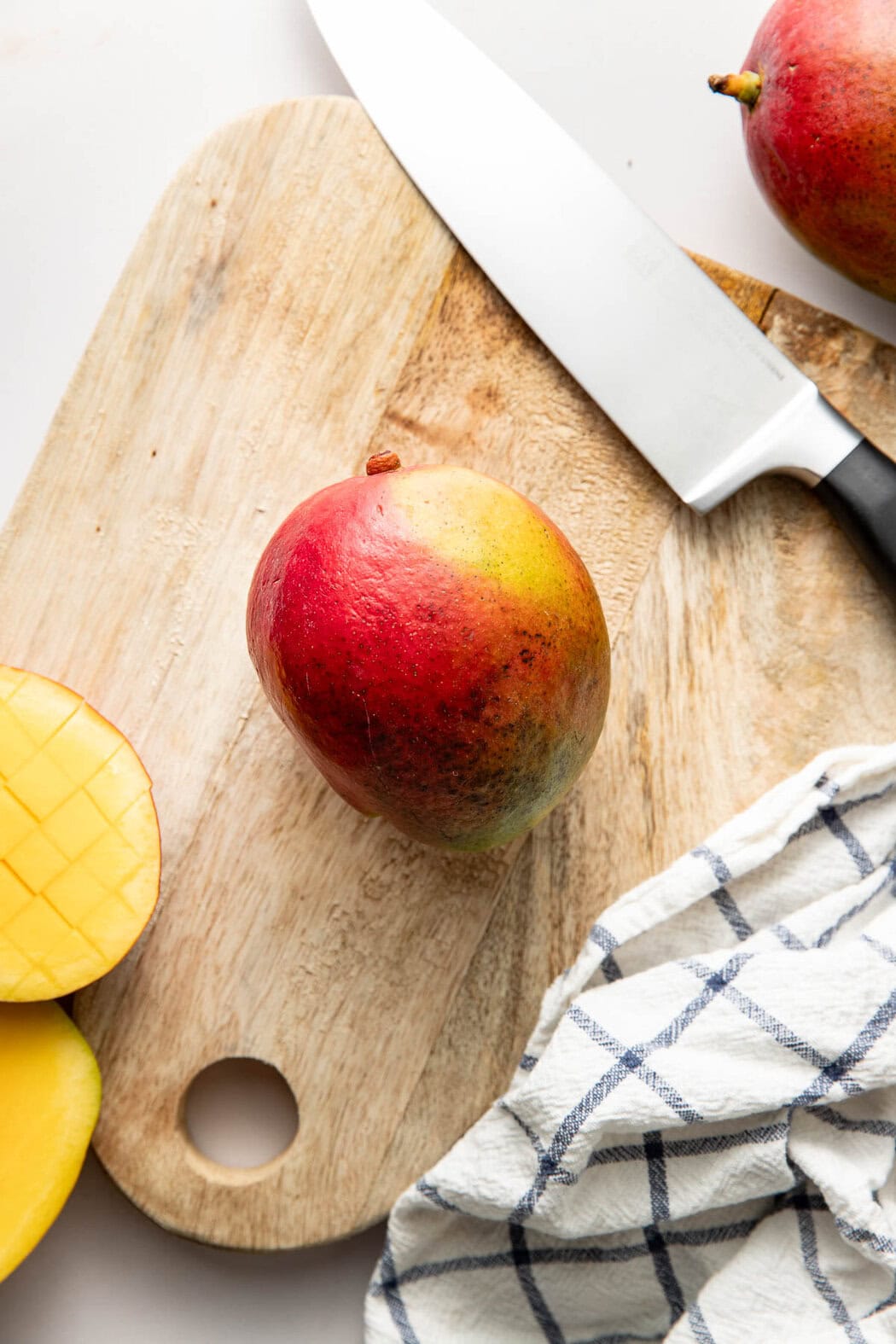
Because mangoes can have different colored outside skin, it’s best to select a mango based on feel and smell. I look for mangoes that have a little “give” to it when I very gently squeeze it. It shouldn’t be rock hard and it shouldn’t be too soft and squishy either – somewhere in the middle. Very minor wrinkles or bumps are usually an indication that the mango is ripe and sweet, so I pick one of these if I’m going to use it right away. I also give the stem end of the mango a little whiff to make sure it has a sweet tropical fruit scent.
What You Need To Cut A Mango
There are no speciality tools needed to cut a mango – just these everyday kitchen items:
- Cutting board – I use a sturdy and heavy wood cutting board as my base
- Sharp chef’s knife – use this to slice the sides off the mango
- Paring knife – this is great for making the small slits that help make diced mango
How To Peel And Cut A Mango: Step-By-Step
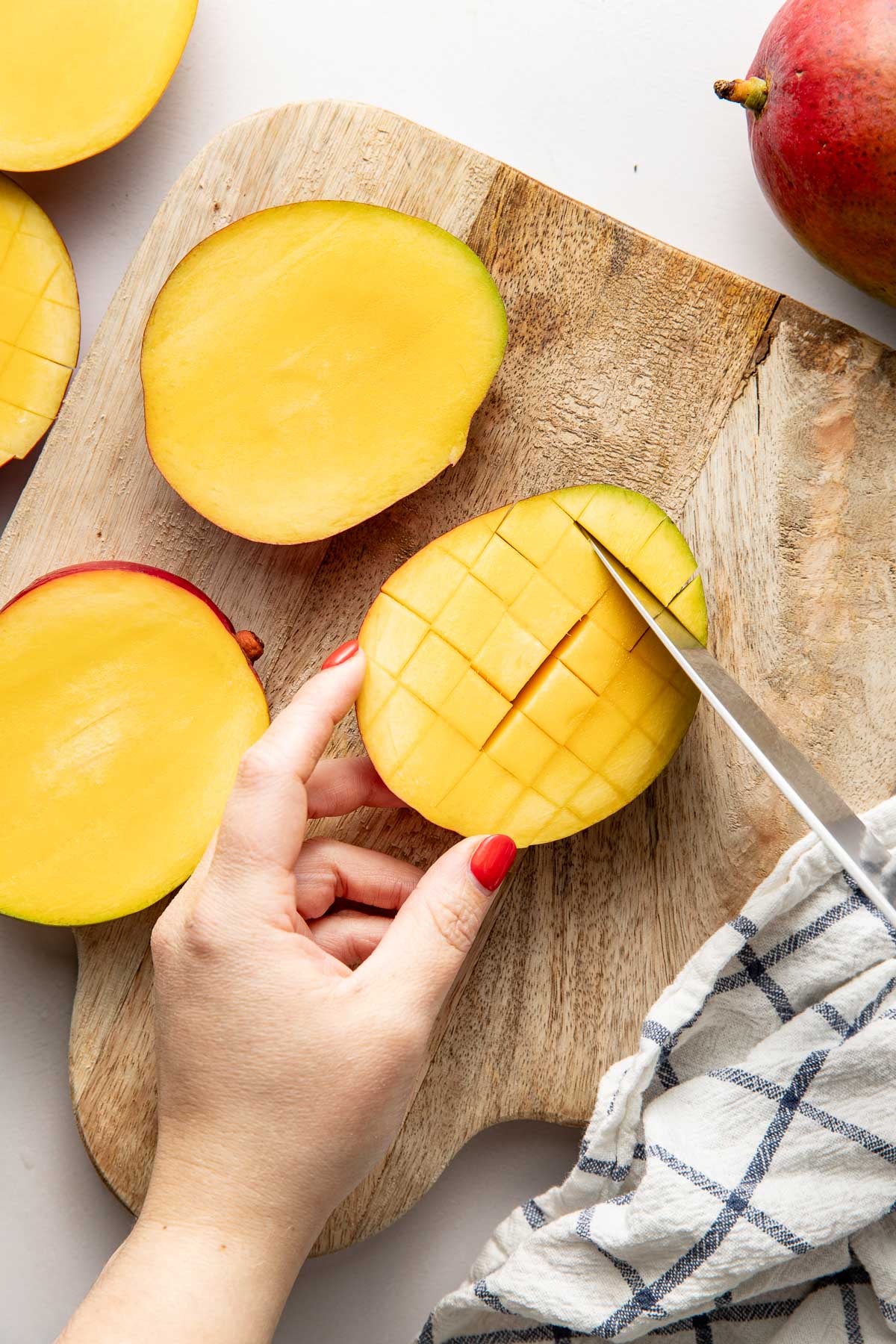
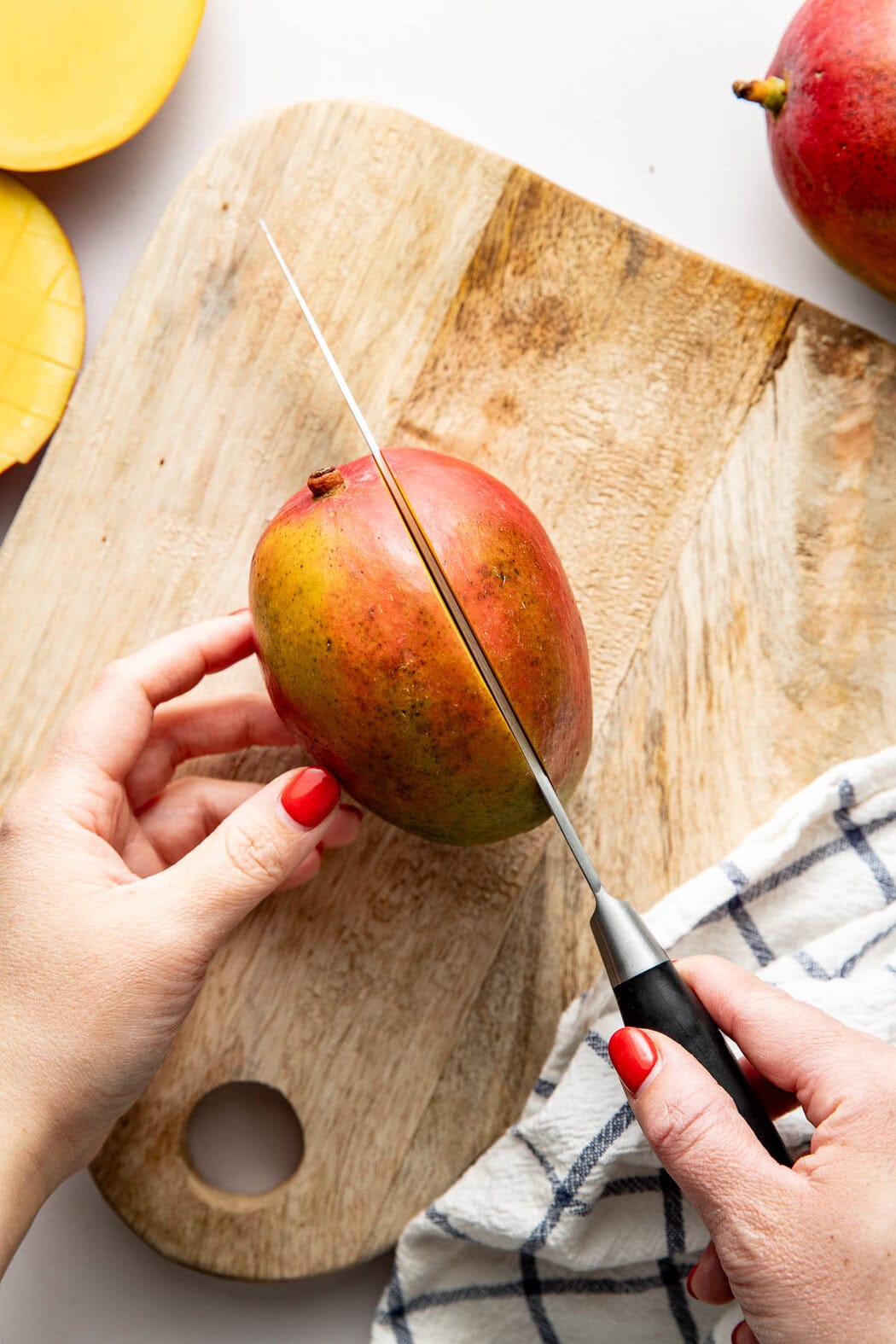
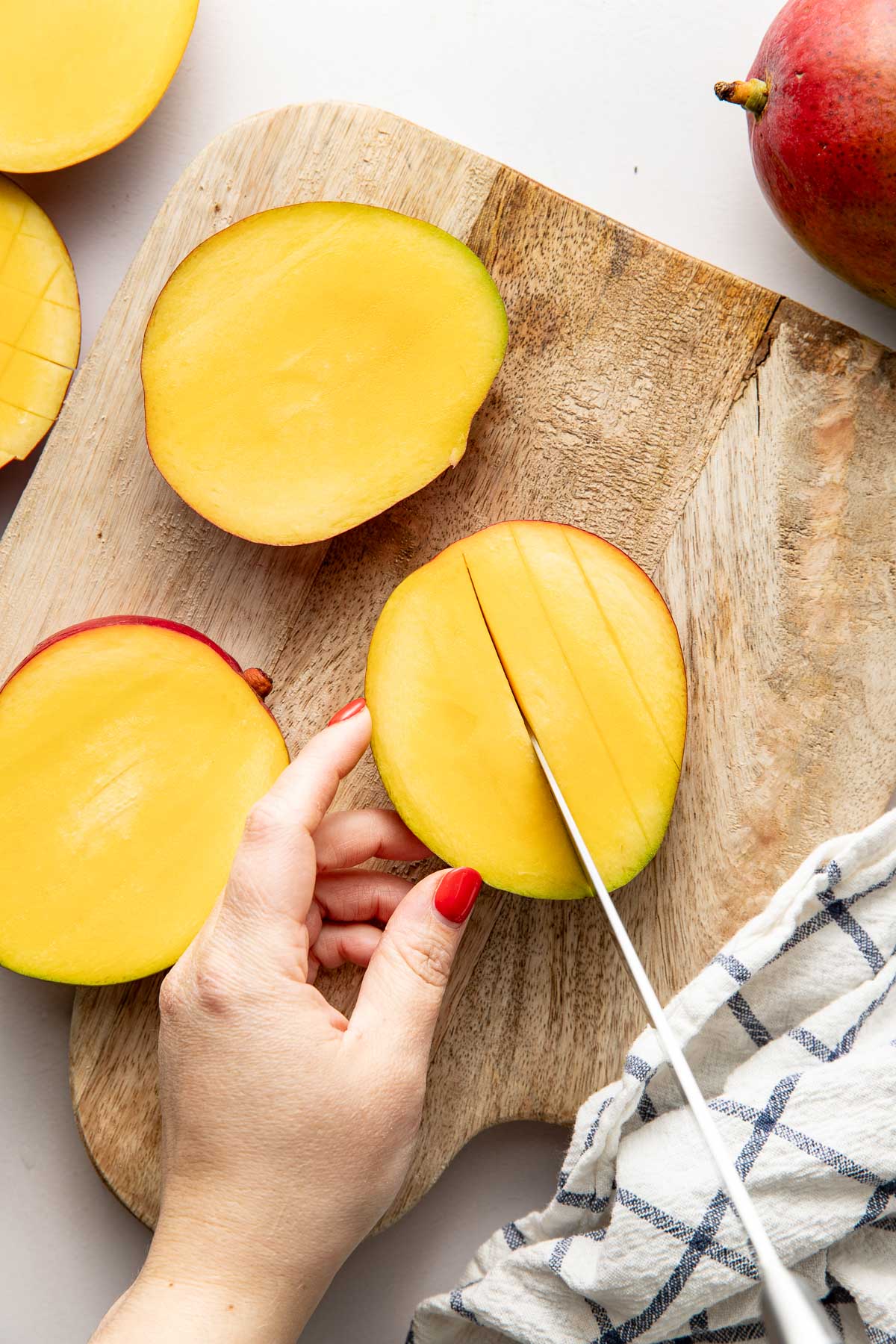
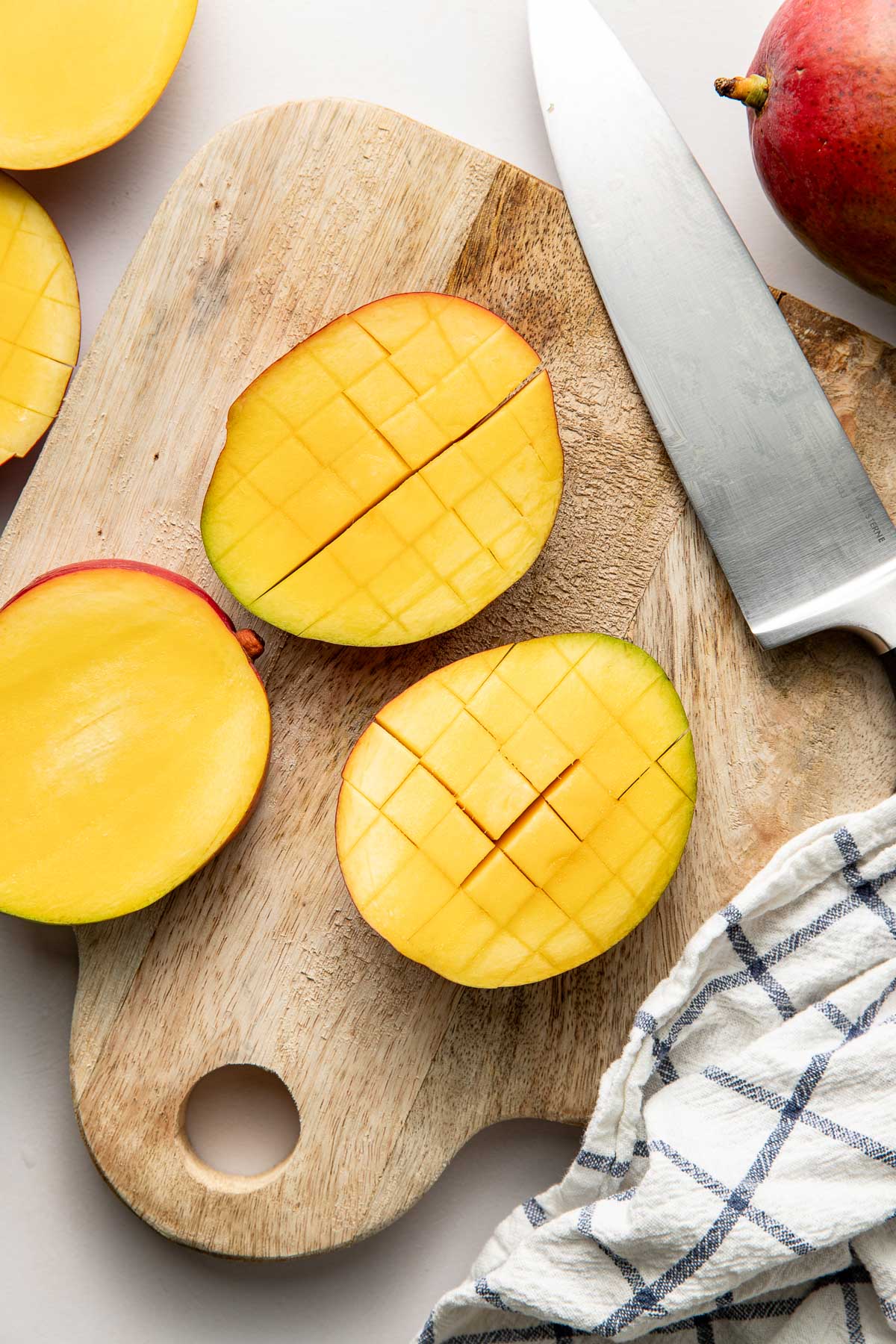
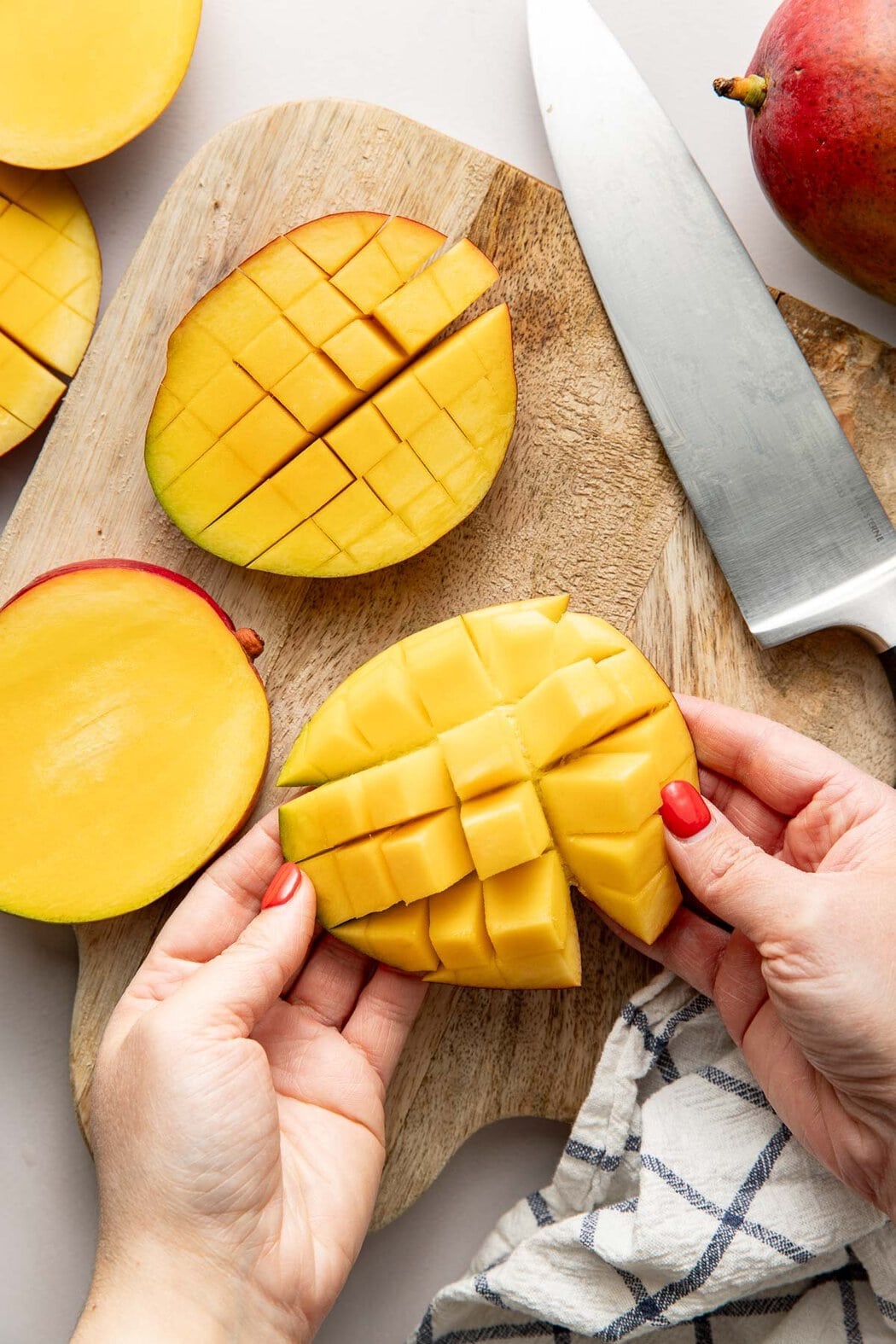
The most important thing to know when cutting a mango is that the inner seed is shaped like a small surfboard. With that knowledge, it’s easy to visualize the inner, long flat seed and cut around it to maximize the amount of diced mango. Use these step-by-step photos as a guide and refer to the recipe card below for the full instructions.
Ways To Use Fresh Cut Mango
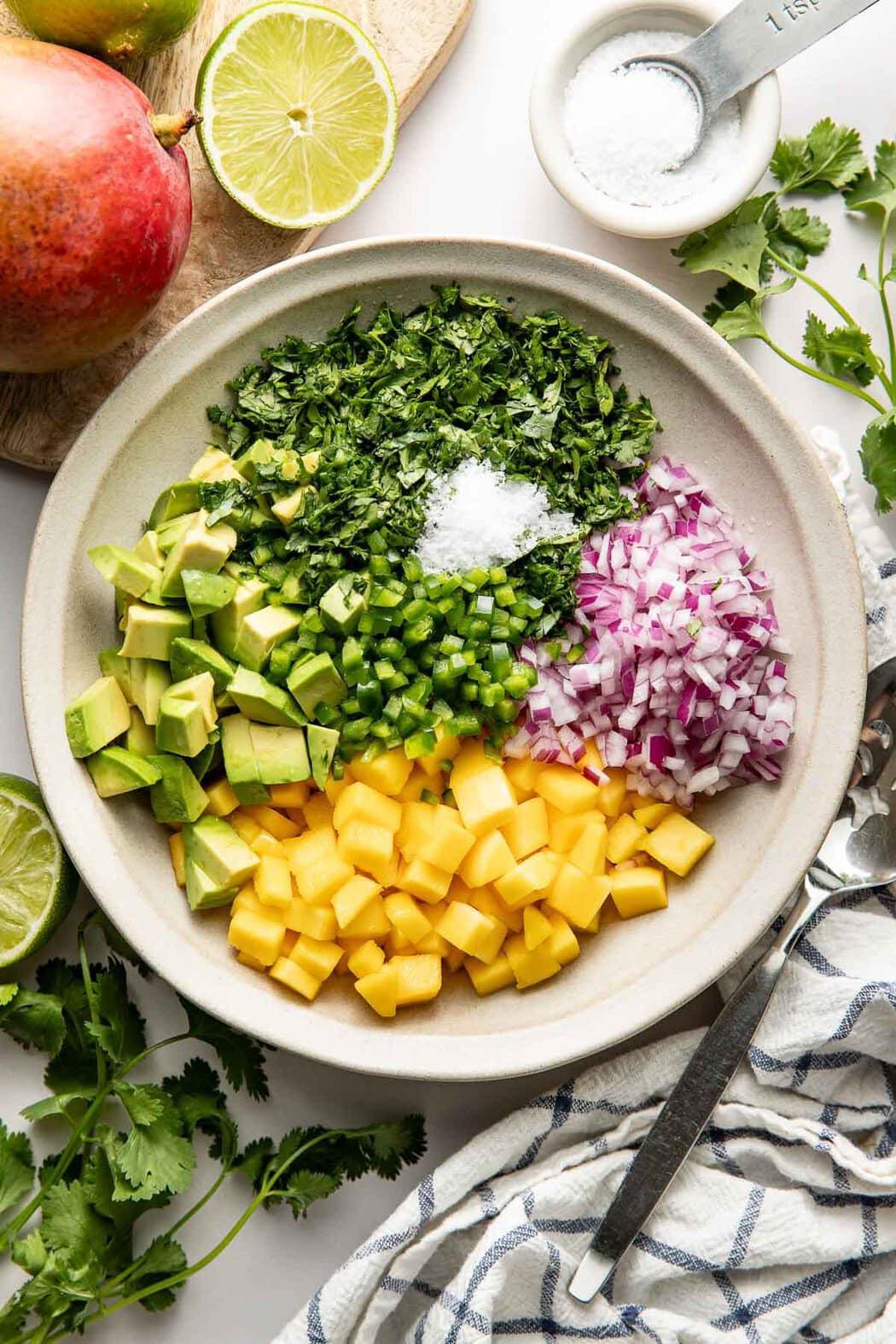
There are many mango recipes that call for fresh diced mango, which is when it comes in hand to know how to cut a mango the easy way. I love to serve fresh cut mango for snacking or adding to a charcuterie board. It’s also great for making smoothies, adding to salads, or making mango salsa with red onion, avocado, and cilantro to serve with grilled salmon or shrimp tacos. I’ve also added diced mango to this chili-lime black bean salsa in place of the diced bell pepper to give it a more sweet-savory flavor profile.
Frequently Asked Questions
Yes, always rinse a fresh mango under cold running water and gently rub off any dirt or sticky debris with your hands. Dry the mango with a kitchen towel before cutting into it.
Store diced fresh mango in an airtight container in the fridge for up to 5 days.
Yes, fresh cut mango freezes well. To freeze it without it clumping together, spread the diced mango pieces in an even layer on a parchment-lined baking sheet. Freeze the pieces directly on the baking sheet for 2-3 hours, then transfer the diced mango to a freezer bag and freeze for up to 6 months.
Both fresh and diced mango contribute fiber, vitamins, minerals, and antioxidants. Fresh mango also contributes some water content and doesn’t come with added sugars. Whereas some types of dried mango are tossed with sugar, syrups, or preservatives to make them less sticky, tart, and extend their shelf life. When buying dried mango, look for brands that don’t contain added sugar.
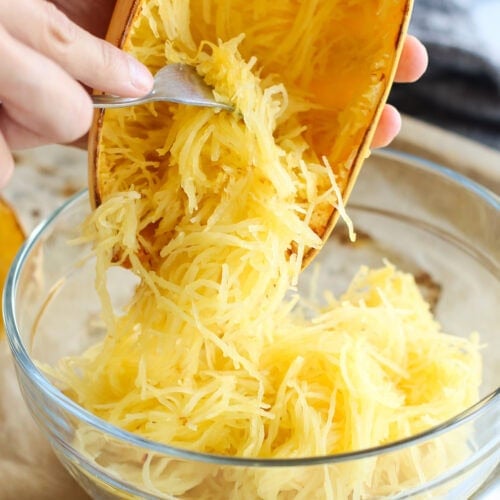
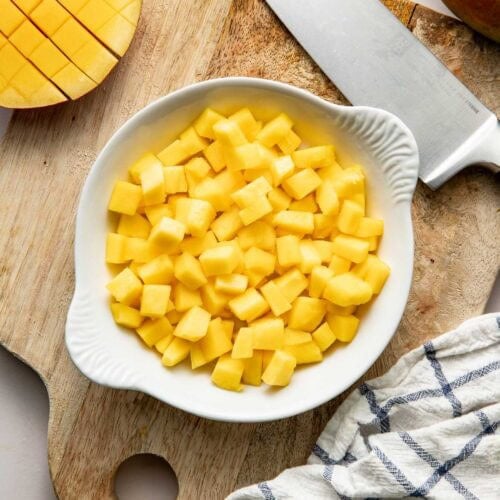
How To Cut A Mango
Maximize the amount of diced mango you can get from a fruit by using this best method for how to cut a mango. Use fresh cut mango in a variety of recipes, from salsa to smoothies and desserts. Or freeze the diced mango for up to 6 months.
Ingredients
- 1 ripe mango
Instructions
- The most important thing to know when cutting a mango is that the inner seed is shaped like a small surfboard. With that knowledge, it’s easy to visualize the inner, long flat seed and cut around it to maximize the amount of diced mango you can get.
- Do not peel the mango skin. Place the mango on its side with the stem end away from you and the bigger sides of the mango on either side. Make a cut straight down about ½ inch on either side of the inner core in order to cut off both flesh sides of the mango, known as the mango cheeks.
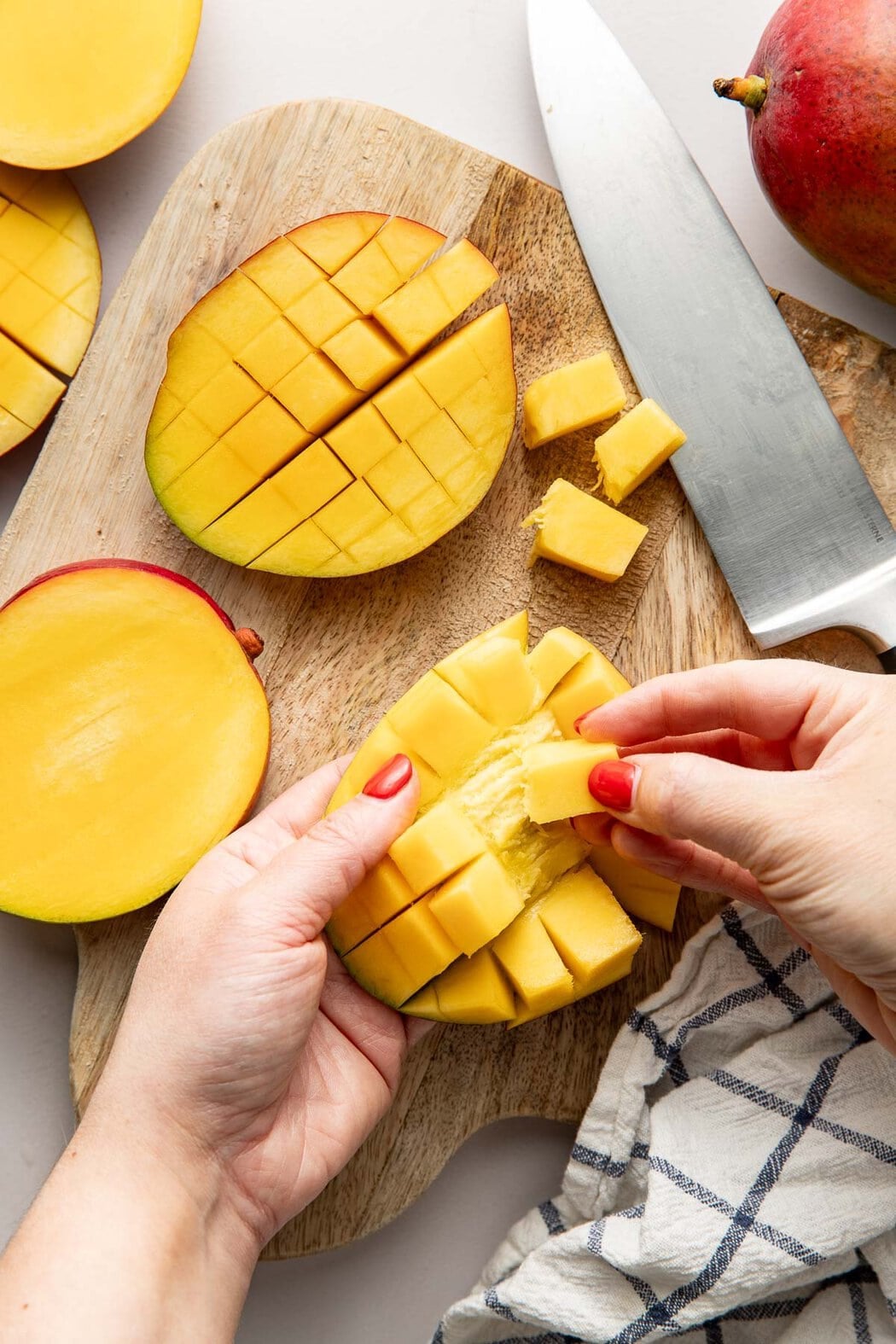
- Use a knife to make vertical and horizontal slits down to the skin (not through the skin) to score each mango cheeks into small square-shaped pieces.
- Using your fingers, gently press on the skin side and invert one of the mango cheeks so the square-shaped pieces pop forward.
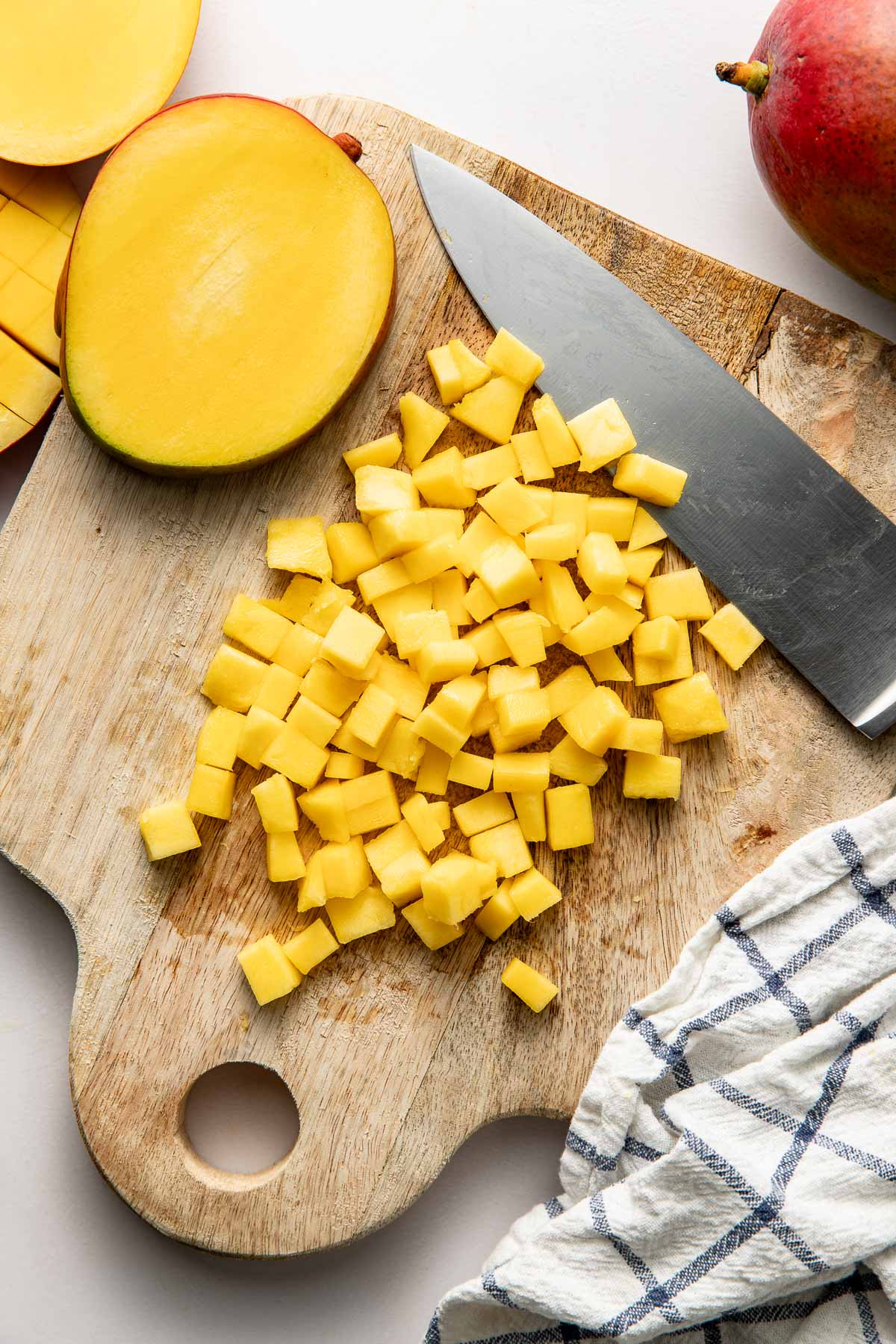
- Use your fingers to peel away each small piece of mango and place it on the cutting board. Cut those pieces into uniform size diced mango.
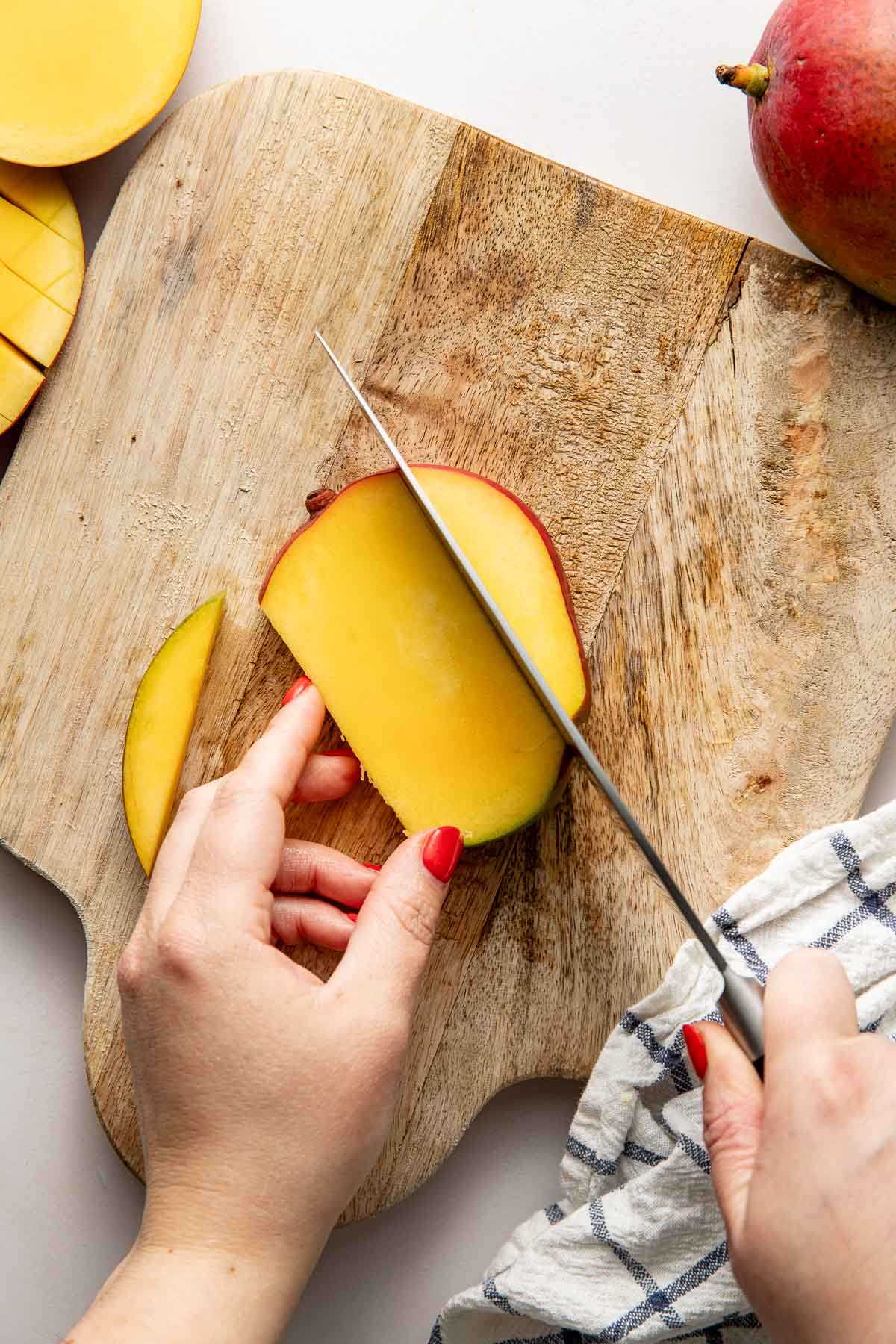
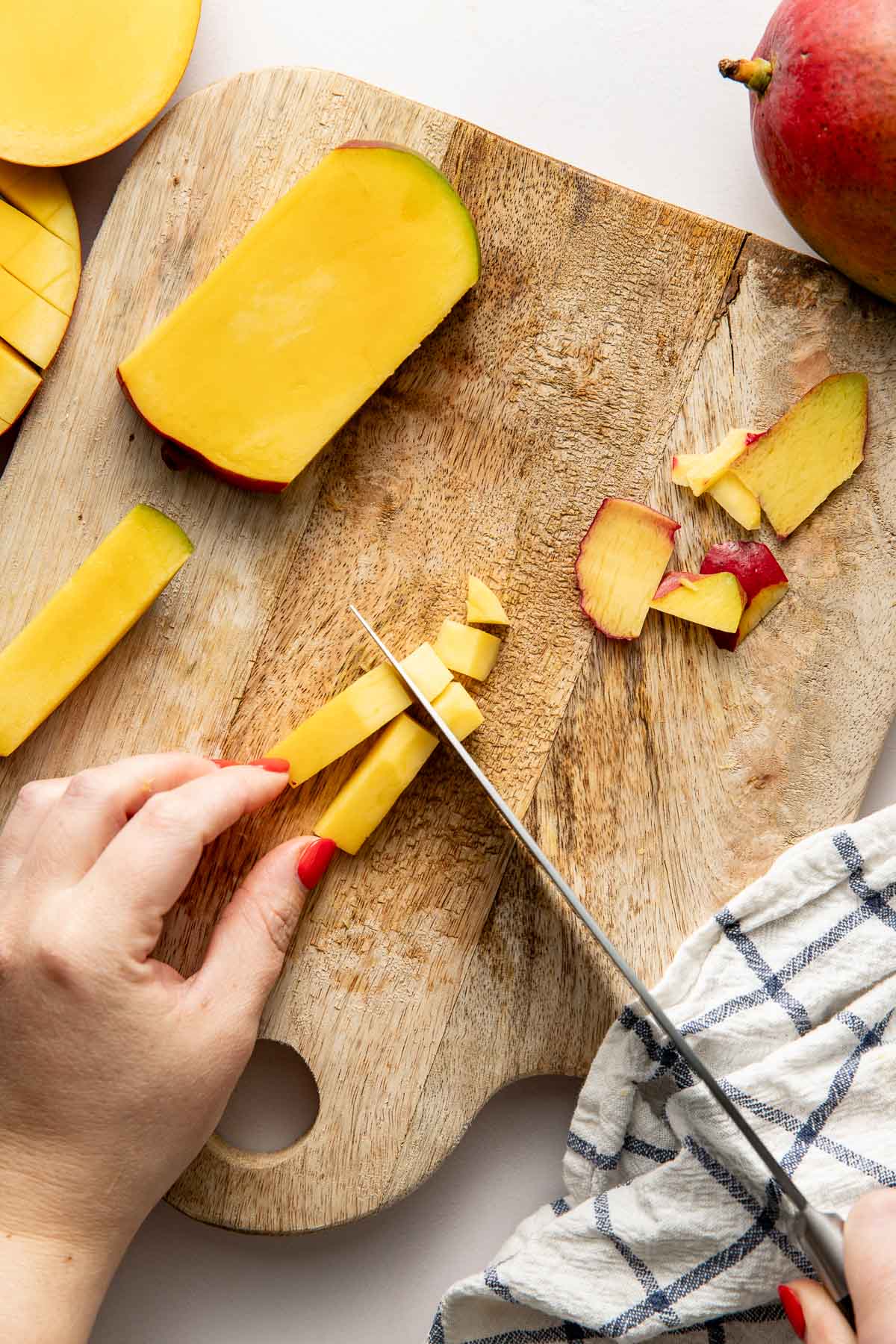
- Next, take the center core piece and cut off as much of the mango on both sides of it as you can without cutting into the large flat pit.
- For those pieces, peel the skin away with the knife, then dice the flesh that remains.
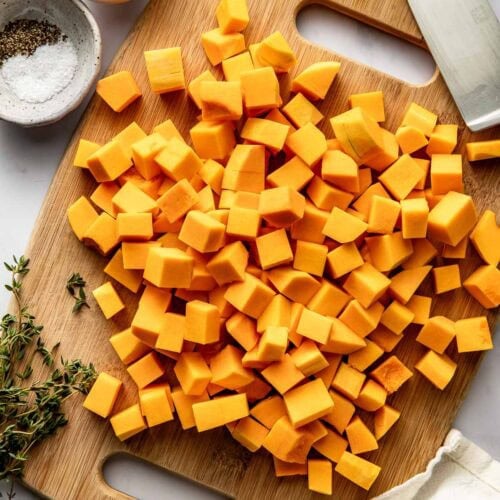
- You should have about 1 ½ to 2 cups diced mango, depending on the size of the mango. Use it right away for snacking with chips or to make mango salsa. Or refrigerate it in an airtight container for up to 5 days or freeze for up to 6 months.
Last Step! Please leave a review and rating letting us know how you liked this recipe! This helps our business thrive so we can continue providing free recipes and high-quality content for you.
Nutrition Information
- Serving Size: 1/4 cup diced fresh mango
- Calories: 24
- Fat: 0 g
- (Sat Fat: 0 g)
- Sodium: 0 mg
- Carbohydrate: 6 g
- (Fiber: 1 g
- Sugar: 5 g)
- Protein: 0 g
- Cholesterol: 0 mg
The photos in this post were taken by Megan McKeehan.
For ultimate success, we highly recommend reading the tips in the full blog post above. All photos and content are copyright protected. Please do not use our photos without prior written permission. If you wish to republish a recipe, please rewrite the recipe in your own unique words. Link back to the source recipe here on The Real Food Dietitians. Thank you!